Introduction
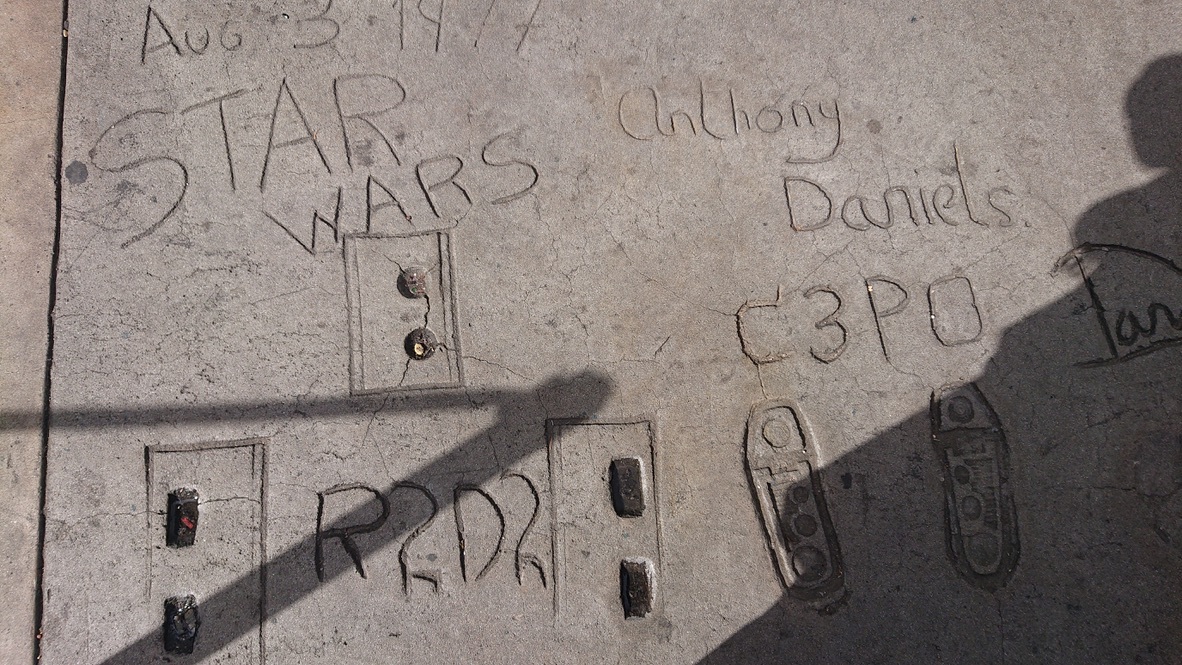
When Star Wars (hereafter known by its contemporary title, A New Hope) was released in 1977 to audience acclaim and box office success, there were two breakout stars: the futuristic droid Artoo-Detoo and his gold sidekick See-Threepio.[1] Writing in the Daily Mirror, one journalist gushed that acting veterans Alec Guinness and Peter Cushing were “completely overshadowed” by the “tubby computer” and “gold-plated electronic tin man” (Thirkell 1977, 17). Both characters received positive write-ups in the British press, and the pair were invited onstage with costar Mark Hamill to present an Oscar at the 1978 Academy Awards (see, for example, Daily Mirror 1977, 5, and Hollywood Reporter 1978, 14). The droids’ contribution to popular culture was also immortalized outside the Chinese Theatre in Los Angeles. The two characters “put their steel hand and footprints into cement in the Hollywood Walk of Fame alongside the prints of the great film stars of the past” (Belfast Telegraph 1977, 9). Their impressions in the sidewalk are still visible today (see figure 1).
The droids’ walk-of-fame plaque in California, though, does not give the full story of the material impression that they made on the planet. Artoo’s on-screen antics in a galaxy far, far away are well known to audiences around the world, yet the carbon and other environmental footprints that his production necessitated are not. For whether made practically (that is, fabricated by craftspeople using tools) or digitally (created by animators using computer software), his appearance onscreen has an ecological history. However he has been fabricated at different points in time, the droid’s existence has depended on the exploitation of metals and petrochemical products sourced from the natural world. Artoo’s presence onscreen has also relied on human labor to transform raw materials into usable assets like costumes (as per many of his scenes in A New Hope), props, or digital animations (as in the 2002 Attack of the Clones).
_and_see-threepio_(c3po)_in_the_s.jpeg)
While critical to the success of many films and television shows (it’s impossible to imagine Star Wars without the iconic lightsaber or stormtrooper helmets), props and costumes have received little attention in studies of the screen industries’ environmental impacts. A 2020 industry report found that the average blockbuster-scale production filmed on location in the UK generated 2,840 tonnes (metric tons) of CO2e (CO2e tells us the global warming potential of a range of greenhouse gases expressed as an equivalent mass of carbon dioxide). Transport and energy use on a single day’s filming alone totaled more than the average person’s carbon footprint in Britain for an entire year (BAFTA albert et al. 2020, 6, 12).[2] However, in focusing on location-shoot energy consumption, catering, and transport, the report paid limited attention to onscreen assets. This article, then, addresses the underresearched ecological footprint of costume and prop fabrication for blockbuster media productions. Comparing two iterations of Artoo-Detoo—one made from aluminium, and one CGI—the study assesses the life cycles of both assets to interrogate commonly held assumptions about technological innovation and the digital’s green credentials.
Supported by a grant from the Arts and Humanities Research Council, I am principal investigator for a research study of the Environmental Impact of Filmmaking (EIF) project (Harrison 2023, eifproject.com). This project examines the ecological effects of asset-making for Star Wars media and the franchise’s location shoots.[3] It takes an interdisciplinary approach that combines film history, political economy, and environmental studies; the article’s coauthor, scientist Dr. Siti Syuhaida Mohamed Yunus, has contributed quantitative data. This work builds on scholarship that calls for more environmentally oriented, ecomaterialist screen studies through analysis of production, circulation, and management practices in a range of industrial contexts (such as Bozak 2011; Cubitt 2017; Kääpä 2018).
Throughout this article, I draw on original interviews, archival materials, and life cycle assessments (LCAs, which determine the emissions produced by material use and manufacturing processes) conducted by EIF project research associate Dr. Siti Syuhaida Mohamed Yunus. Comparing an aluminium costume made for A New Hope with a computer-generated (CGI) version of the droid from Attack of the Clones, our findings uncover the global warming potentials of the two fabrication methods. The study also introduces a new unit of measurement (CO2e per second of screen time), which allows for comparisons between assets with different material qualities. Consequently, our comparison reveals that making the practical costume generated fewer emissions than digital animation, and thus challenges received wisdom that computational techniques are more ecologically friendly than practical ones.
By conducting interviews with a number of below-the-line Star Wars crew members, whose testimonies tend to be missing from Lucasfilm-sanctioned accounts, the research also provides critical new histories of film production in England. The interviews offer new insights into labor conditions and reveal how workers have understood and responded to climate change since 1976. Through its engagement with these worker knowledges, the article advocates an approach to ecologically conscious filmmaking that puts the past in tension with the present. By recovering and learning from screen-media histories, we can, I argue, transform how the screen industries lessen their environmental impacts in future.
The article initially summarizes the focuses on the aluminium Artoo unit worn by actor Kenny Baker in A New Hope, before turning attention to the CGI version of the droid. It then offers a methodological account of the study’s approach to conducting life cycle assessments. Next, I share findings from the practical and digital LCAs, and suggest two changes that the screen industries could adopt to effect greener practices: hybrid practical-digital fabrication and the restoration of asset-commoning between productions. Finally, I contextualize the recommendations in broader debates about the long-term sustainability of blockbuster-scale mediamaking.[4]
Ecomaterialism in Context
The impacts of the screen industries’ extractivist, fossil-burning activities contribute to climatic and other environmental changes that are tangible globally. For example, in Finse, Norway, where The Empire Strikes Back was filmed in 1980, climate change has caused the glacier that hosted the Rebel base on the ice planet Hoth to recede. Between 2003 and 2010, scientists estimate that it shrank by 17 meters (Weber et al. 2019, 1895). Elsewhere, an average global surface temperature increase of 1.19°C (from a baseline in 1850–1900 to March 2024) has resulted in extreme weather events, such as in Pakistan and Bosnia, that have killed or displaced millions of nonhuman and human animals (Forster et al. 2024; Akbar 2023). Ecologists cite human-caused factors including “climate disruption” alongside “habitat loss, overexploitation, invasive organisms, pollution, [and] toxification” as causing the “sixth mass extinction” of life on Earth (Ceballos et al. 2017, E6090).
While the screen industries produce only a fraction of the greenhouse gases that contribute to global heating, a 2025 report determined that digital video accounts for 4 percent of total global emissions annually—with production activities responsible for 60 percent of the industry’s overall footprint (Hibbert 2025, 17). In particular, blockbuster media production typically creates spectacle via large sets, huge numbers of international crew and performers, multiple locations, and technologically of-the-moment equipment. Blockbusters are phenomena founded on planned obsolescence (Hills 2003, 181); they require resource-intensive production and are frequently updated or rebooted. Ironically, the hostile, fantastic environments that Star Wars creates for entertainment—the extreme heat of Mustafar in Revenge of the Sith (2005) and flooded plains of Kef Bir in The Rise of Skywalker (2019)— become ever more likely on Earth as a result, at least in part, of screen industry activities.
In its attention to the environmental impacts of blockbuster media, this study is cultivated from a rich landscape of ecocritical and ecomaterialist scholarship. Nadia Bozak’s foundational work (2011) examines the natural materials that both sustain film production and appear as motifs onscreen (“resource images”) and provides a framework for critiquing the medium’s embeddedness in fossil capital. Referring to Agnès Varda’s gleaning from already available resources to create a “second-hand cinema” (163), Bozak’s advocacy for more ecologically sustainable filmmaking resonates throughout this article, and chimes with the views of many interview participants whose testimonies contribute to it. Furthermore, I draw on scholarship concerned with globalized supply chains, such as studies by Richard Maxwell and Toby Miller (2012) and Sean Cubitt (2017), which explore the many human and environmental costs of our reliance on digital technologies. Hunter Vaughan additionally provides a historical account of practical and visual effects in Hollywood productions that has been invaluable to this project (Vaughan 2019). Cajetan Iheka’s work (which critically repositions the African continent as central, rather than marginal, to ecocritical media studies) has also expanded my knowledge of labor conditions throughout technologies’ life cycles (Iheka 2021). While focusing primarily on Britain and the United States, the article thus draws attention where possible to the neocolonial contexts of exploitation that underpin blockbuster mediamaking.
Aluminium Artoo
Production on A New Hope began in England in 1976. Explaining the decision to shoot outside of the United States, producer Gary Kurtz cited the vast studio space of Elstree (located northwest of London) needed to realize the ambitious film. Moreover, there were “‘key British technicians we wanted to work with’” (Grimley 1977, 5). Among those technicians were John Stears, the special effects supervisor, and Roger Christian, the set decorator, both of whom contributed to the design and build of Artoo-Detoo. Because Artoo had to glide across challenging terrains and move his dome-shaped head, the team needed to build multiple versions of the droid to meet the script’s requirements. They created six full-size units and one half-size, which sat inside Luke Skywalker’s X-wing ship. Four and a half units were robotic iterations; two were costumes worn by Kenny Baker. The full-sized robots used three legs to move around, while Baker’s costumes had two (Perry 1977, 46). Much of Artoo’s development can be traced back to Christian, whose penchant for dressing sets with reused materials collected from scrapyards underpinned the Star Wars aesthetic. In an interview, he described how the team built a prototype Artoo on a small budget and with limited materials. With the body made from spare wood supplied by Christian’s domestic carpenter, the droid’s dome was “10 shillings [from] an old dump site for film lamps [less than £3.50 in 2024 …]. We built it around Kenny Baker, who’s 3′ 8″ [tall]” (Christian 2023).
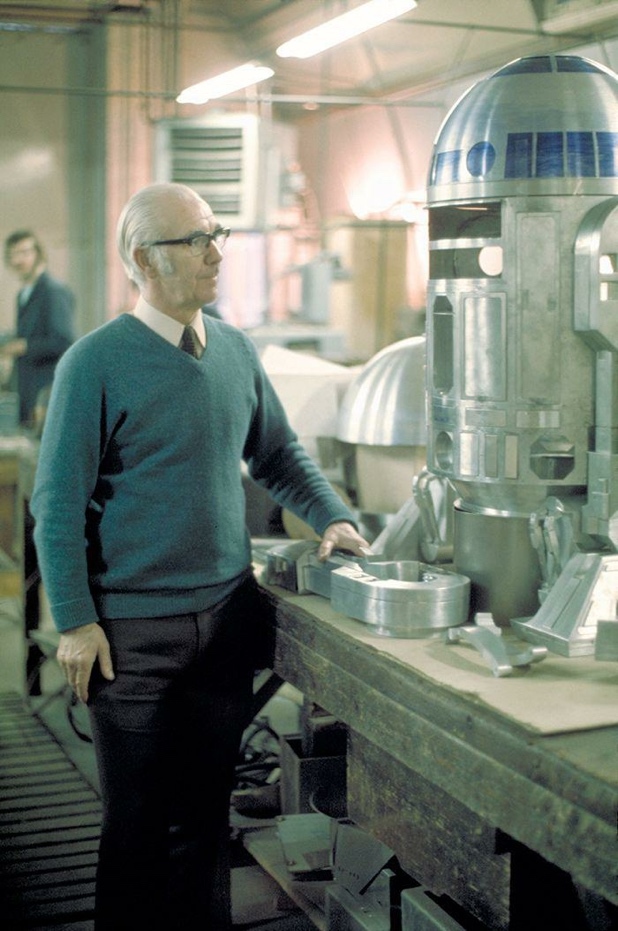
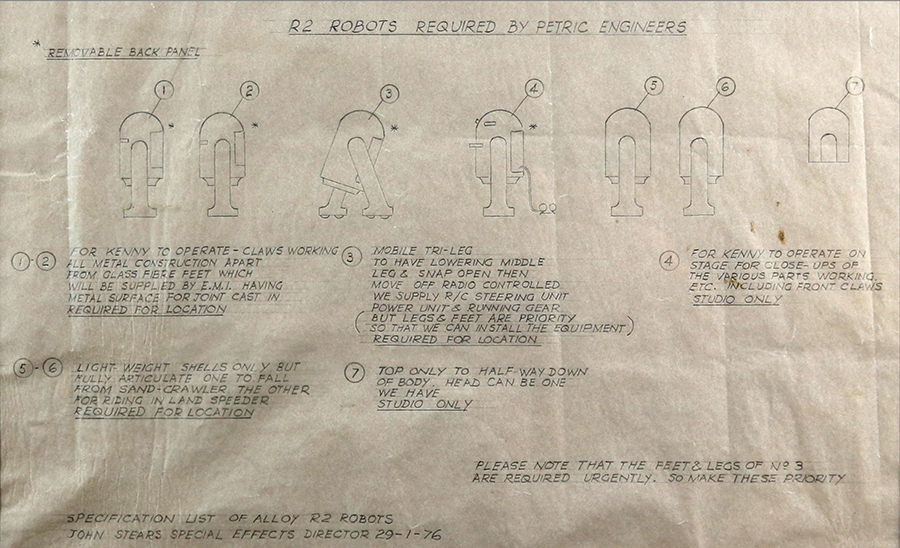
When it came to fabricating the assets, the team commissioned specialist support. They enlisted C&L Developments to machine the droid’s arms and Peteric Engineering to manufacture the aluminium sheet-metal components that made up the body and dome (Watling 2013). Working from casts of a wooden prototype, Peteric engineers (who usually made pharmaceutical items) built all six and a half units from rolled sheets of aluminium, rather than relying on cheaper casting methods. Peteric owner David Watling suggested that rolled sheets enabled his team to create versatile units that were light enough to be worn by Baker and to glide across sand. The company was responsible for all of Artoo’s mechanisms except the arms; “[a]s far as I know,” said Watling, “the only addition to R2s after they left our factory was cosmetic” (Watling 2013). The engineer responsible for Artoo’s build was Jack Swinbank, who “worked out all of the dimensions and probably made the markings on the head mould.” Swinbank determined the profiles of every component before cutting them to size and punching the panel and door shapes through on the flat with a Strippit 3030 punch machine (see figure 2). Star Wars chronicler Brandon Alinger points out that it was “quite a difficult job, because all six [and a half units] had to be identical.” He suggests that the total factory time involved was around 10,000 hours (Alinger 2014, 84).
_inspects_an_artoo_unit._the_photogr.jpeg)
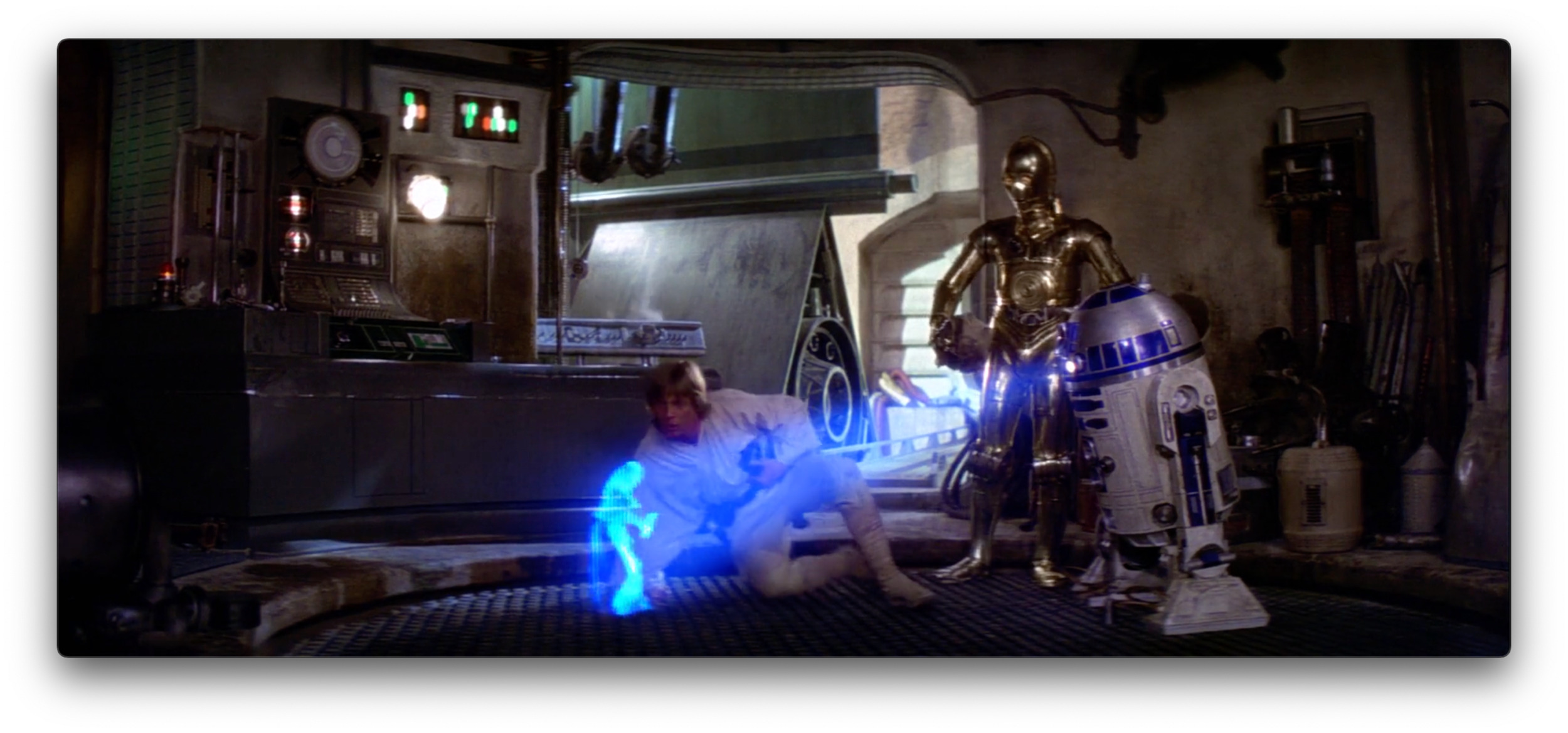
Over at Elstree, Artoo’s basic form was supplemented with “army surplus stuff,” including a reading lamp from a Vickers Viscount plane (the droid’s “eye”) and a fighter pilot’s harness (to fit the costume to Baker), which the crew sourced from military and aviation scrapyards across England (Christian 2023). Ball bearings ran in a circuit around the droid’s neck, which allowed Baker to turn the dome head from inside the unit. Completing the look was a battery-powered, fiber-optic electrical system with a motorized color wheel that was designed, said Stears, to “give Artoo-Detoo a visible change in mood” (OpenR2 2019). Director George Lucas believed that such anthropomorphic qualities were essential to Artoo’s communication with audiences; in A New Hope, Baker was able to tilt the droid and swivel its head to bring the character to life (see figure 3). Lucas preferred the costume droid, recounted Baker, “‘because it comes to life more. [He] liked how I would jerk the suit around as opposed to being smooth like the remote robot’” (Perenson 1999, 31).
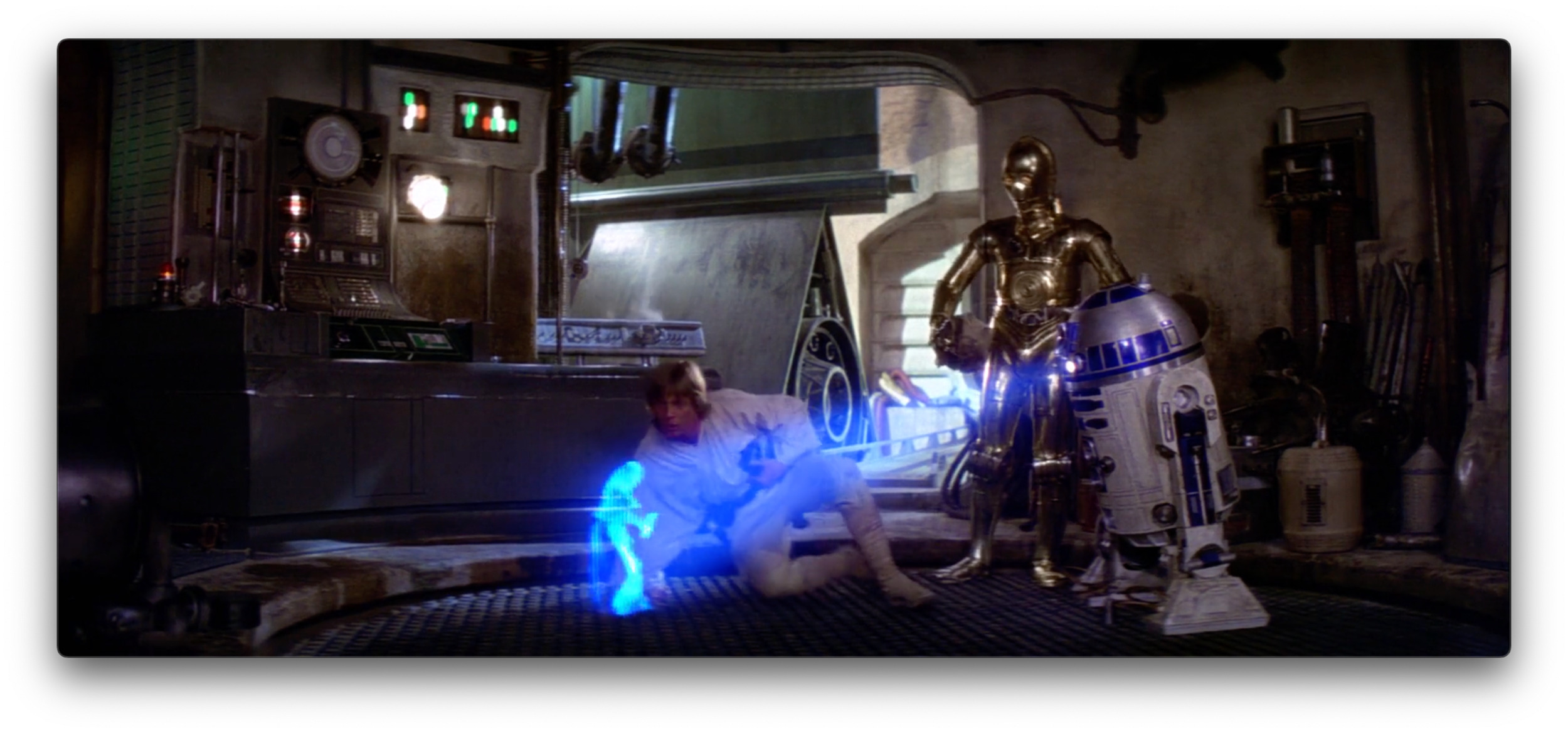
Together, human- and remote-controlled versions of Artoo worked to create a futuristic character that was relatable and alive. However, while evoking a robotic future, the character’s appearance in A New Hope also tells a story about Britain’s past. For, constructed primarily from aluminium (which is derived from bauxite), the droid’s materiality depended on industrial practices that exploited colonized people and natural materials in the Global South (Gendron et al. 2013). Made from sheet aluminium, Artoo originated in the “semi-fabricated” part of the industry that relied on secondary metal—that is, metal produced by “selective blending of inputs from manufacturing industry, scrap merchants, and some direct purchases of scrap (bus and truck bodies, aircraft, etc.)” (Programmes Analysis Unit 1975, 7). The semi-fabricated sector in Britain was at the time experiencing numerous economic challenges. Oil prices had more than doubled owing to the 1973 Organization of Petroleum Exporting Countries (OPEC) embargo, furnace efficiency was low, and industry electricity use accounted for ~2 percent of the United Kingdom’s total consumption (equivalent to 4.5 million tonnes of oil). A 1975 industry report made numerous efficiency recommendations that encouraged industry leaders to lower emissions and recycle scrap metal, with a secondary view to minimizing the sector’s environmental impacts (Programmes Analysis Unit 1975, 10–11, 18–20).[5]
It’s likely, then, that Artoo’s aluminium was recycled from the same kinds of aviation and military scrap as his “greeblies” (a film industry term for aesthetic adornments to props and sets). Consequently, while the Star Wars crew did not make ecologically conscious decisions when reusing found materials—as confirmed by Christian and other art department members in interviews—their Artoo costume fabrication inadvertently demonstrated environmentally sustainable practice. Additionally, owing to aluminium’s durability, the Artoo units made for A New Hope were reused on other Star Wars productions. When Don Bies started his Lucasfilm career in the company’s archives (he become an Artoo remote-controller on the 1999–2005 prequel films), he recollects that “there were I think around fourteen or fifteen Artoos.” And “whether they be metal or fibreglass or in some cases a combination,” the bodies could be reused (Bies 2023). Chris Challoner, who worked in the art department on The Phantom Menace (1999), remembers when some original Artoo units arrived at Leavesden, the studio north of London where crew shot the film. “I remember the day that Artoo-Detoo turned up,” he told me. Typically his team didn’t bother visiting the sound stage. But “[t]hat was a really good day […] it was the only day everyone in the art department actually went down to see something.” Moreover, he noted, storing and reusing assets was common for the franchise. “You got a sense that everything [was] re-crated and stored to be used again,” he said (Challoner 2022).
Digital Detoo
Alongside Artoo units arriving onset for The Phantom Menace, Challoner also recalls the shoot’s reliance on practical effects; he says that “huge” amounts of the film were made using traditional fabrication techniques. But practical effects specialists were “seeing their whole world come to an end,” says Robert Jackson, who was employed at Silicon Graphics Inc., the company then supplying graphics cards to Lucasfilm’s visual effects subsidiary, Industrial Light & Magic (ILM). He notes that following positive audience reception of the spectacular CGI dinosaurs in Jurassic Park (1993), many filmmakers hyped up digital effects. It’s a sentiment echoed by Don Bies. On reading Lucasfilm publicity claiming that practically built miniatures were created digitally, he realized “oh okay, our days are numbered.” “We were the bastard children of Lucasfilm,” he says (Bies 2023).
While CGI use was overstated in the press, George Lucas championed digital filming, effects, and projection throughout the prequel film shoots. Having tested high-definition digital video on The Phantom Menace (which was mostly shot on 35 mm Mylar film), Lucas was convinced of the technology’s “clarity, efficiency, cost-savings and compatibility with digital effects production.” As reported in trade magazine Cinefex, Attack of the Clones became the first full-length, “large-scale motion picture” to use the format (Duncan 2002, 62). Lucas extolled the virtues of digital because, aside from being cheaper than shooting and printing on film, “‘[i]t doesn’t get dirty’” (Moore 1999, 23). Digital animation also enabled Lucas to avoid the delays and expenses associated with transporting physical assets; when filming on location in Spain, the crew “just didn’t want the hassle and the setup of un-crating a physical droid” (Bies 2023). However, the ILM team was also short on time and material resources, with separate digital modeling, painting, lighting, compositing, and animating making the workflow “unwieldy” (Bies 2023). Hence work on Artoo and other important assets was carried out by the “Rebel Unit,” which worked with special effects supervisor John Knoll. The so-called Rebels operated alongside the main ILM pipeline using a distinct set of hardware—Apple Mac computers—and software including Adobe Photoshop, FormZ, Electric Image, and LightWave (Duncan 2002, 63).[6] Knoll’s idea, recalls Bies, “was to hand-select a small group of digital artists that could do everything.” In Artoo’s case, a basic geometric model was passed on to Billy Brooks, who saw the droid’s build through to completion, with 18 digitally animated shots of the droid appearing in Attack of the Clones (Bies 2023).
The process was time-consuming; it took two weeks for Brooks to remodel the head and another four to match the metal textures to that of an aluminium unit (Desowitz 2002). Brooks worked almost exclusively in LightWave; during production for Attack of the Clones, version 7 (released in 2001) was the most advanced on the market. Its user manual promised “multi-layered surface textures”—produced by tools for “Color, Luminosity, Diffuse, Specularity, Glossiness, Reflection and Transparency”—and high-quality images (NewTek 2001). Throughout the manual, there are frequent references to the challenges artists might face when creating composite images or complex animation sequences that required processing of large volumes of data at speed. “If your computer is accessing virtual memory frequently during rendering, you may find a substantial increase in performance by installing more RAM on your machine,” the manual advised (1.4). It suggested that artists use “the processing power of other computers on a network to render scenes,” which is known as “distributed rendering,” or “sometimes a rendering farm” (19.1).
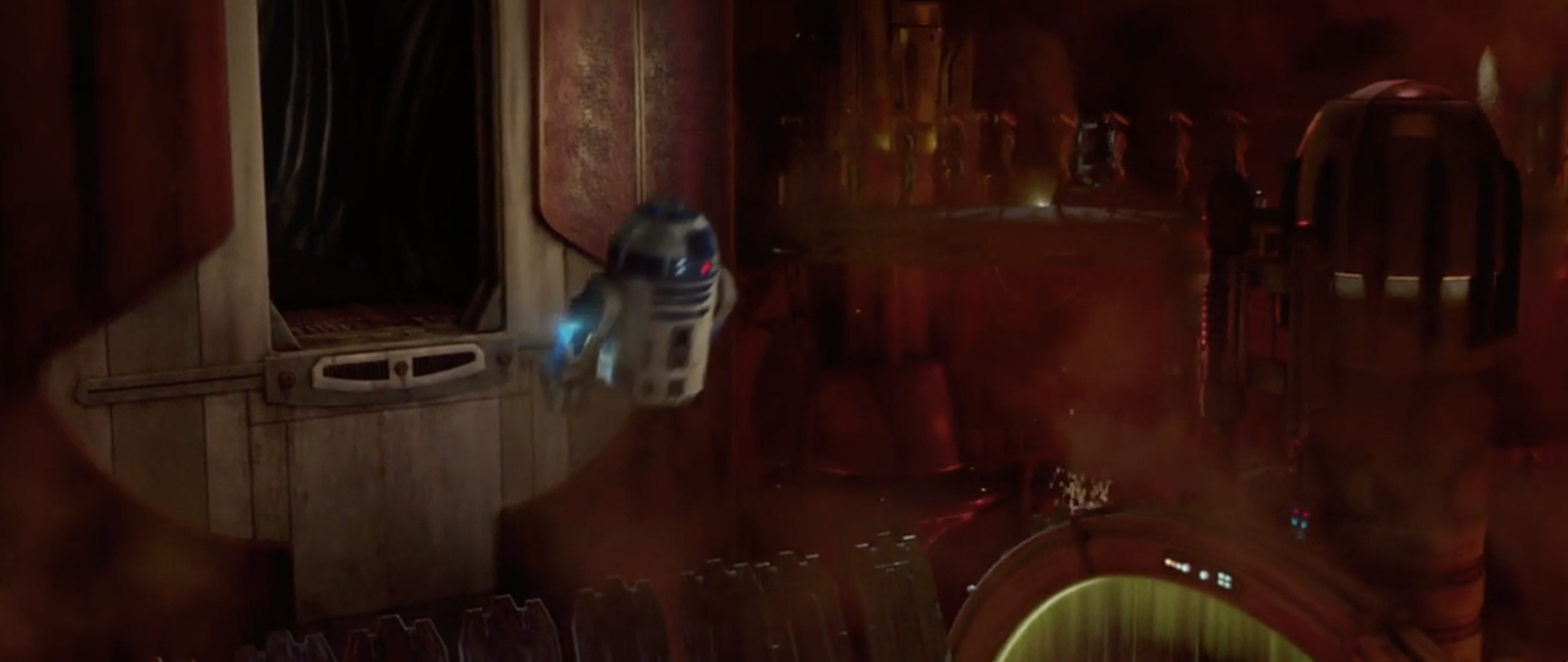
As is typical of English vocabulary describing digital media (cloud storage, ethernet, streaming platforms, green screens, airdropping, torrenting, and so on), the artists’ need for a render farm evokes an organic, even agrarian process. It also makes the technology seem immaterial, which many scholars argue is a deliberate tactic used by manufacturers, among others, to encourage consumption. For example, Siobhan Angus notes that photography and its evolved technologies have been implicated in capitalist processes of dematerialization since at least the nineteenth century (2024, 7); the same processes underpin what Laura U. Marks and Radek Przedpełski call “the hard fantasy” that the internet is “immaterial” (2022, 211–12). Artoo’s CGI appearance in Attack of the Clones reinforces the fantasy, for when the digital droid appears to fly using rocket boosters, he is untethered both narratively and materially from his previously earthbound, material position (see figure 4).

Yet all digital production requires human-made machines, and audiovisual data in machine-language form exist as physical files on material hardware. While digital Artoo seems to be conjured from nothing but the lightness of pixels, he emerges from a network of hard drives, graphics cards, processors, cables, and screens manufactured from extracted natural materials. Take, for example, the computer that Brooks probably used to design and animate the droid—the Apple Mac Server G4, which was one of the highest specification models available at the time (EveryMac.com 2023). The machine’s two graphics cards required aluminium pins; the PCI card (Peripheral Component Interconnect) needed brass-alloy components; the casing, mouse, and keyboard used molded thermoplastics derived from processed fossil matter. Silicon, extracted from sand, was critical to Mac microchip production (adding a layer of irony to Star Wars character Anakin Skywalker’s declaration in Attack of the Clones, “I don’t like sand”).
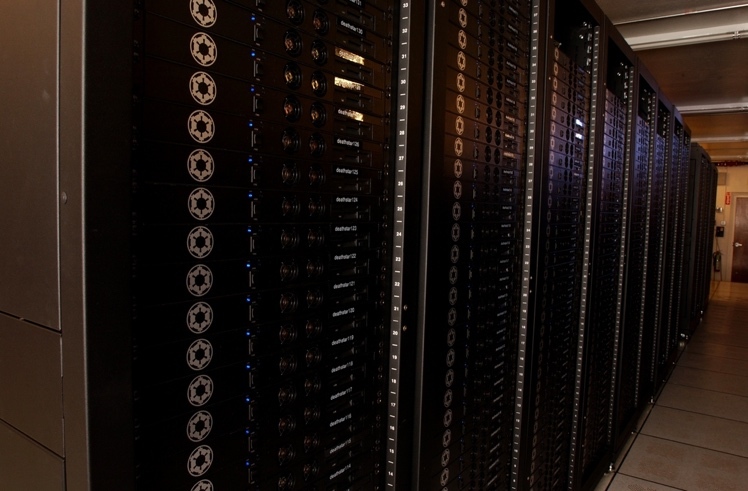
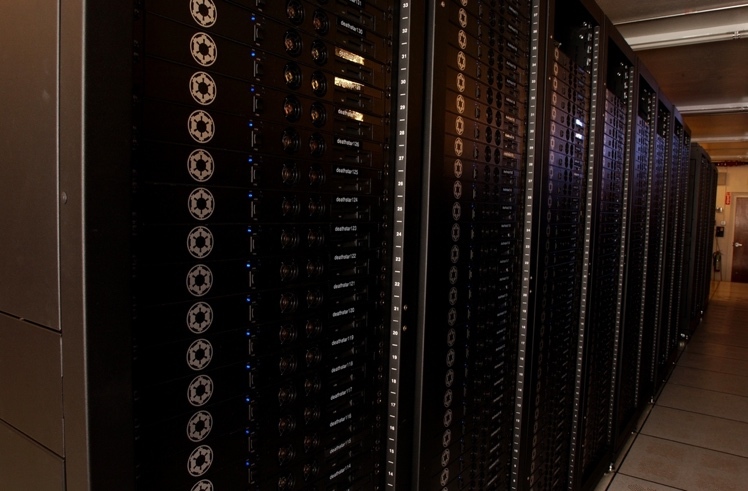
In addition to the hardware’s materiality, powering Bies’s machine required ongoing energy consumption. The electricity supply relied on a physical infrastructure of cables, substations, and fossil fuels. And, as per the LightWave manual, the data that animators created would necessitate render farms. The machines that ILM used for the purpose were Silicon Graphics Inc. (SGI) O2s. Each O2 stacked multiple, interconnected Linux-operated “blade” servers (each with its own memory and processing components) in what Robert Jackson describes as “huge refrigerator-sized” storage units (Jackson 2023). The technology, he says, emerged as a result of military investment in digital innovation. Initially adopted by the automotive and aviation sectors, SGI developed Hollywood connections, and serviced ILM and animation studio Pixar, among others. At ILM, the 1,500 processors provided by SGI were, says Jackson, “collectively called the ‘Death Star cluster’”—named, with no-doubt unintentional foresight, for the planet-destroying weapon that appeared in the original-trilogy Star Wars films (see figure 5). The production was so data-intensive that overnight the render farm would draw on an additional 1,000 desktop computers. Systems developer Mike Thompson said that the network managed “‘total aggregate traffic of about 70TB a day,’” all of which increased the demand for electricity, which powered and cooled the servers (Rowe 2003). Although Thompson noted ILM’s need for the most energy-efficient machines on the market, the energy consumption required to animate Artoo-Detoo was significant.
Consequently, while the digital Artoo of Attack of the Clones had a very different genesis and aesthetic to that of the practically built droid of A New Hope, there were a number of parallels between them. The two respective production teams consisted of dedicated craftspeople who worked adjacent to the main crew to create the droids. Both units had military-, automotive-, and aviation-industry antecedents: Aluminium Artoo was born from recycled Second World War scrap that put old transport parts to reuse; digital Detoo was made possible by technologies invented for military purposes and initially adopted by car and plane manufacturers. And whether appearing as a costume or a dematerialized CGI animation, the droids required raw materials and electricity use in their fabrication. As our LCAs reveal, though, that’s where many similarities end.
Measuring Footprints
For all the equivalences between the two droids, it’s challenging to compare them directly. It’s difficult to measure historic material use with precision, and the complexity of each asset’s fabrication makes it hard to account for energy consumption and so on. To support comparisons between practical and digital Artoo builds, Mohamed Yunus has conducted life cycle assessments, which provide an estimated global warming potential for each asset. LCAs quantify the environmental impacts of goods or services “from the most basic level to the final stages of that good or service [… including] raw materials, transportation, use, waste removal, and any other steps involved in creating, using, and removing a good or service” (Cabello et al. 2023, 6–7).[7] LCAs vary in detail depending on the availability of information about the object of study; they are a “decision-support tool rather than a scientific measurement tool” (7).
The Artoo LCAs are cradle-to-gate, in that they consider environmental impacts from the beginning of each asset’s fabrication up to the point it was usable onscreen. Both our LCAs include materials, energy use for known machination, and, in the costume’s case, transport from one site to another. To conduct the research, Mohamed Yunus referred to Ecoinvent, a database providing average emissions and other environmental impact data for a variety of materials, infrastructures, and technological processes.[8] The database (which updates its datasets every few years, enabling historic comparisons between like-for-like objects) allows users to determine the likely CO2e of a particular weight of rolled aluminium, or to account for the CO2e produced by a desktop computer’s manufacture.[9] Mohamed Yunus chose Ecoinvent owing to its wide application across a range of industries, and international recognition among scholarly communities. She calculated LCAs with an error margin of ±15 percent for practical emissions (see appendix A, tables 1-4) and ±20 percent for digital (see appendix B, tables 5-8).
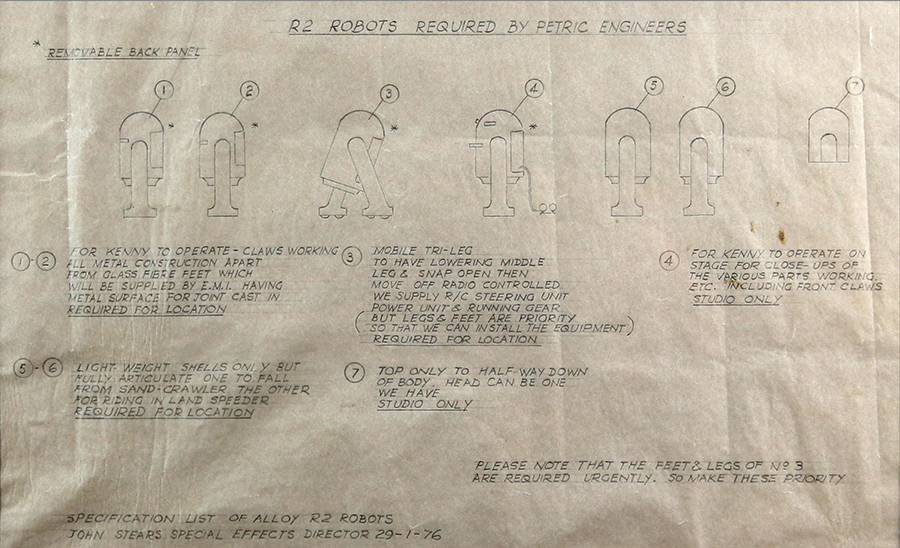
Unconventional, often creative detective work informed our estimates for material usage and fabrication processes. The Smithsonian Institution—which owns one of the aluminium costume Artoos—gives the droid’s overall size as 111.76 x 66.04 x 72.39 cm, which provided a useful starting point (National Museum of American History 2023). Mohamed Yunus then referred to copies of original drawings (see figure 6) and droid fan-builder websites that provide instructions for making Artoo replicas (Media-Conversions LLC 2020; 3DSF 2023; CuriousMarc.com 2023) to gather measurements for the dome and legs. I also referred to a range of archival sources and measured objects similar to the scrap used by the production team, such as lengths of ducting for air-conditioning units. The car seat that Baker rested in while inside the costume (comprised of polyurethane foam, metal tubing, and a canvas cover) was based on details in safety legislation from the closest year I could find to 1976 (British Standard Institution 1991). Accounts in Lucasfilm-published histories, meanwhile, gave us insights into the labor time required for the build (Alinger 2014).
Compared to the costume droid’s complexity—with its integration of repurposed found objects, and outsourced machination—ascertaining life cycle data for the CGI Artoo seems more straightforward. In theory, it’s a case of accounting for the hardware, considering energy consumption, and thinking about labor hours and file sizes. Yet, in practice, it’s challenging to calculate any of these elements with precision. As Udit Gupta et al. point out, “[t]he environmental impact of ICT is complex and multifaceted,” with LCAs factoring in “consumption of energy, water, and materials such as aluminium, cobalt, copper, glass, gold, tin, lithium, zinc, and plastic” (Gupta et al. 2021). To compensate for potential inaccuracy in the calculations, Mohamed Yunus used conservative estimates when determining the global warming potential of each element in Artoo’s fabrication processes.
The digital LCA is based on Artoo being modeled by one artist (Brooks) at one machine (a Mac GS4 with screen, mouse, keyboard, and cables). The droid’s fabrication took at least six weeks (with two spent modeling the head and four matching the metal’s aesthetic to a practical asset). Mohamed Yunus has therefore calculated the global warming potential of six weeks’ design work in an office space, with 30 days of animation at 10 hours per day.[10] Additionally, the LCA accounts for file sizes and storage. Brooks would have saved Artoo’s constituent files using the lossless OpenEXR format, which was commonly used by ILM artists (Chen and Yan 2021).
However, knowing the file type does not offer clues as to the size of the files that Brooks produced. One insight comes from an article about Casper (1995), which featured four characters digitally animated at ILM. They were onscreen for around 40 minutes and required 27 terabytes of storage capacity (Einstein 1995). Made six years later, though, Attack of the Clones would have benefited from improved efficiencies in data creation and storage; moreover, Artoo’s digital presence in the film is less than the Casper ghosts at just 69 seconds.[11] Thus, to discover the droid’s likely storage requirements per second of animation, I contacted university professor Nicolas Poteet, who worked on visual effects and 3D animation in the early 2000s (email correspondence, July 13, 2023). Based on his estimates, digital Artoo’s LCA accounts for 300 MB of server capacity per one second of animation (30 frames per second of digital animation, with each frame requiring 10 MB).
As the study demonstrates, calculating LCAs for historic, complex fabrication processes is challenging and requires a mixed methodological approach. Furthermore, the LCAs do not include every aspect of production that I uncovered in my research, which would have been near impossible to calculate per droid based on available data. For example, the energy-intensive machine parts needed for rolling aluminium sheets are not incorporated in the LCA. Nor are the ILM servers or their energy consumption; given that pre-visualization animatics on The Phantom Menace alone demanded such enormous electricity consumption that “new power had to be installed” at ILM (Cotta Vaz 1999, 67), this study’s energy estimates are generously low. Nevertheless, by accounting for the main materials used in Artoo builds, and factoring in essential energy use, we have created original datasets that are broadly comparable, and indicative of the global warming potential of each droid.
The Droids’ Environmental Impacts
According to EIF project calculations, aluminium Artoo weighed just shy of 19 kg. When considering the costume’s found and new materials, energy consumption used in assembly, and transport from Shepperton to Elstree, the research found that making one costume produced 682 kg CO2e. For the CGI version, the LCA accounted for hardware, energy consumption with one desktop machine during the design period, and data transfer across the server network of the approximate file size. The digital droid’s LCA suggests a global warming potential of 4,248 kg CO2e—over six times higher than Artoo’s practical forebear. In terms of carbon sequestration in trees, it would take a full-grown, healthy tree nearly 33 years to offset emissions from the costume; the same tree would need to capture carbon for 202 years to have the same mitigating effect for the CGI droid (Howell 2022). The figures reveal substantial differences between the two making processes, and CGI Artoo’s far greater global warming potential is a significant find. It challenges received wisdom about digital animation, which practitioners may assume to be ‘greener’ than practical fabrication, and prompts those industry figures with power to rethink approaches to environmentally sustainable practice.
The two datasets are, however, difficult to compare because they do not have equivalent units of assessment. One is a practical asset that can be (and was) reused multiple times on different shoots. The other consists of animated digital footage unlikely to be repurposed. Thus, I have created new, analogous units of assessment—mass of carbon dioxide equivalent per second of screen time (kg CO2e/sst)—to better assess the global warming potential of each unit. On this basis, the costume’s emissions were ~1 kg CO2e/sst (to the nearest whole number), and that of the CGI droid was ~62 kg CO2e/sst. Figure 1 gives a full list of materials, weights, and emissions.
Moreover, the droid’s digital footprint, measured in kg CO2e/sst has, in all likelihood, increased since 2002 because the files sizes required to make 4K-standard assets offset any improvements in energy efficiency. Poteet suggests that one frame of digital animation can range from 50 to 100 MB or more, equating to 1,500–3,000 MB per second (email correspondence, July 13, 2023). He estimates that one minute of CGI Artoo footage comprising multiple layers and color passes would equate to hundreds of gigabytes at least—a figure that doubles if the asset is animated at 60 frames per second, and doubles again if stereoscopic. At a conservative estimate, assuming that animators used the .MOV format to composite Artoo’s files, the droid’s storage during production would run to ~27 GB per second of screen time.[12] Even when using fossil-based materials such as polyurethane foam, it’s likely that practical fabrication has a smaller global warming potential than digital animation (Harrison and Yunus 2023).
That the CGI Artoo’s global warming potential is approximately 59 times greater than that of the aluminium costume upends arguments in favor of digital over practical fabrication on the basis of environmental sustainability. There is, of course, some value in digital work, such as sharing resources via online platforms, and using software to design efficient workflows (McWhirter 2022). But the screen industries’ overreliance on digital solutionism, which includes the adoption of resource-intensive generative AI, risks undermining the sectors’ sustainability goals instead of helping to meet them. Global demand for online data is likely to outstrip technical efficiency capacities in the near future (Marks and Przedpełski 2022, 208). Moreover, while renewable energy is making some operations more efficient, the footprint from hardware (such as silicon microchips and other components) is of ongoing concern (Gupta et al. 2021, 38).
Besides their differential energy demands, both practical and digital droids are products of extractivism. The 1976 Artoo costume’s aluminium, for example, was derived from bauxite, which Robert Gendron et al. describe as “a powerful symbol of exploitation by colonial governments and multinational companies.” While mining bauxite may offer employment in some communities, it simultaneously causes “the destruction of the environment” (2013, 2). The 2002 CGI droid relied on machines built with components made from elements usually extracted from sites in the Global South, such as Chile (copper, lithium), Mexico (silver), and Democratic Republic of the Congo (cobalt) (Angus 2024, 198). As Iheka points out, “[t]he conditions of mining these materials in places such as the Congo are devastating and dangerous, and the recompense is so little compared with the risks involved” (2021, 65). Many waste electronics consumed in the Global North are returned by waste disposal businesses to the African continent for burning and recycling, which is undertaken by underpaid workers who inhale toxic chemicals (73). Consequently, the harms caused by fabricating assets like Artoo-Detoo do not, whether practical or digital, end with mining.
Hybrid Working
Artoo-Detoo in all his forms is a product of the Global North’s neocolonial extraction of materials and exploitation of labor in the Global South, where workers are surely Artoo’s uncredited makers alongside official Star Wars contributors. While it is impossible to produce an environmentally clean Artoo using existing materials and technologies, filmmakers can reduce the ecological harms caused by existing fabrication processes. In keeping with the original trilogy’s “lived-in” aesthetic, for example, productions can source pre-used materials and apply circular economy principles so that props, costumes, and sets are recycled.[13] As Cabello et al.'s study of traditional and virtual shoots shows, increasing the amount of materials reused can “drastically reduce carbon emissions” (2023, 21). Furthermore, drawing on examples of collaboration between practical and digital artists (such as that between Bies and Brooks), filmmakers could deploy hybrid techniques to keep their digital footprint as low as possible when CGI is necessary.
Hybrid practical-digital making is not a new phenomenon (Chung 2018); it has underpinned Star Wars productions since the 1990s. While publicity departments overstated the digital’s role in the prequels, and that of practical in the sequels (probably responding to changing audience tastes in perceived authenticity), the franchise’s onscreen assets typically rely on both approaches. As Vanessa Bastyan—who was supervising animatronic designer on the sequel and spin-off films, and fabrication design supervisor on Andor (2022)—told me:
The relationships between practical and digital effects have progressed so much. We have found a place where we can take something to the best practical level and VFX [visual effects] can add any elements we are not able to achieve in camera. It is so successful when we work together. (Bastyan and Davies 2023)
Indeed, informal discussion with a VFX supervisor at a well-known effects studio suggests that Disney-era (post-2012) Star Wars productions already exemplify some good practice: Creatives make practical assets and use them to block prop and costume movements on set, which minimizes the need for CGI in postproduction. Other franchises, however, do not deploy hybrid techniques and often overproduce data by demanding that animators create numerous iterations of a single asset. Directors are often responsible for generating terabytes of energy-intensive digital files that are always already waste products.
Of course, as Hye Jean Chung (2018) argues, even practical-digital pipelines for large-scale productions such as The Host (2006) and Avatar (2009) rely on globalized labor and other resource exploitation. However, hybrid practices have three main benefits. First, they enable the reuse of existing assets. Says Christian of the “junk and stuff” that he scavenged for the original trilogy, “[i]t still works” (Christian 2023). Second, while the “Screen New Deal” report overstates the digital’s effectiveness in reducing emissions from practical assets, it does also point to software’s usefulness in designing more efficient workflows (BAFTA albert et al. 2020). Third, integrating both practical and digital effects in production helps to ensure that jobs are preserved in both areas. As Cubitt points out, “sustainability” in industry terms often refers to the survival of the industry, and related jobs or revenue streams that are often vulnerable to change (2023, 20–21). For now, hybrid workflows offer a fundamental and relatively low-risk first step toward greener production.
Commoning Assets
In addition to discussing digital production’s impacts on their working practices, this study’s interviewees identified two further industry-wide changes since the 1970s. First, they mourned the loss of shared resourcing that once underpinned film- and television-making. The practice died out in Britain when studios shifted from an in-house model (whereby the studio provided equipment, asset stores, and crew), to a soundstage-only one. A Shepperton advertisement billed the change as positive, offering producers “complete freedom” to pick and mix facilities, “free from the big overheads traditionally associated with major studios” (Shepperton Studio Centre 1977). The move—a radical one in terms of its scope and impact on workers—enabled studios to gain rental income from what had been storage space. But it also led to studio job cuts and forced producers to outsource the provision of some, if not all, of the resources needed for their shoots. The proliferation of overconsumption that characterizes blockbuster production can in part be traced back to the loss of studio asset stores.
Second, many interviewees suggested that the corporate guarding of intellectual property (IP), broadly perceived as a post-2000 phenomenon, was contributing to both excessive consumption and more waste on shoots. One costume coordinator, for example, described how a production studio’s overprotectiveness of IP led it to archive (that is, lock away) what would otherwise be reusable assets, thus forcing crew working on a related project to purchase yet more very similar materials (Costume Coordinator 2023). An art department worker, meanwhile, suggested that IP gatekeeping undermined asset reuse across productions, even while acknowledging that the archive-rich Star Wars franchise “revamp[ed]” existing assets across its films and television shows (Star Wars Art Dept Technician 2023). They noted that producers on blockbuster epic Cleopatra (1963) allowed discarded sets to be reused by the Carry on Cleo! crew (1963); Victorian-era sets appearing in Oliver! (1968) were stored at Shepperton for repurposing on other productions. Sharing was commonplace in the pre-IP era, they said, “not like, ‘that’s ours and we can’t show that to somebody else.’” Indeed, many interviewees described asset-sharing as a positive practice that could be restored. They noted that its loss had negatively impacted not only consumption habits on sets but also, by limiting their exposure to others’ work, their own professional development.
With the crew’s upcycling of scrap materials for the Star Wars films in mind, it’s possible that inter- and even cross-industry asset-commoning could lead to more environmentally sustainable, and creative, mediamaking.[14] Commons, which typically refer to land and other resources shared by local communities, exist in various guises in Britain and around the world; commoning is the act of sharing and maintaining resources in common (De Angelis, Harvie, et al. 2013). It is a challenging activity (who gets to make decisions? how is the resource maintained? what does “fair” use look like?), and one that in the current mediamaking environment risks being co-opted for capital (Caffentzis and Federici 2014, 97). Indeed, if asset-commoning was to effect real change, it might be such that props, costumes, and sets were shared by creatives to tell stories serving their wider communities—rather than for corporate profit. However, even within the current system, asset-commoning could dramatically reduce the screen industries’ material footprints and benefit many productions—especially those with small budgets—financially. The practice could, then, challenge the exploitation of space (rental income over asset stores) and aesthetic labor (IP) that has normalized worsening production impacts over the past 50 years.[15]
Busting the Blockbuster—For Good?
Taken alongside other green initiatives, the widespread adoption of both hybrid practical-digital fabrication, which is low-risk, and asset-commoning, which has historic precedent, could help production teams minimize their material footprints. Yet, according to below-the-line workers, the resource intensity of blockbuster production is generally increasing (Curtin and Sanson 2017). Some consumption in the screen industries, such as the rise in emissions relative to the hours of media produced, is at least partly attributable to more accurate reporting (BAFTA albert 2023, 5). But one interviewee for this study told me that workers are trained to provide whatever their heads of department demand, without exception: “no-one in the industry says ‘no,’” they said, “the word ‘no’ doesn’t exist” (Costume Coordinator 2023). “[T]he films are getting bigger and bigger,” they added, with larger budgets and sets, and more extras and crew. Inevitably, the films take longer to make and require ever-greater resourcing. People overorder materials from multiple suppliers to ensure that items arrive on time; unused goods end up in skips during the wrap.
On a planet already struggling to cope with people’s overconsumption of natural materials, it is impossible not to ask whether the ends justify the means. Is blockbuster production ever acceptable from an environmental perspective? It is beyond the scope of this article to answer; any just transition to a potentially post-blockbuster landscape must involve input from communities globally. However, I remain unconvinced that blockbuster-scale productions are compatible with a planetary-centered future.
There are, of course, many opportunities for people working in and adjacent to the screen industries to transform mediamaking, and grassroots organizing can successfully bring about change from below (Maxwell and Miller 2012, 163). There is evidence already of its impacts: Workers in UK-based unions BECTU and Equity have created educational resources on environmentally sustainable practice (both 2024). Practitioners and educators have embraced the creative challenges that emerge when telling stories with fewer resources and have experimented with low-impact aesthetics (Marks et al. 2023, 125). Ecologically responsible financiers can opt to fund smaller-scale productions and ensure that media-makers have access to asset commons. Tastemakers, including journalists and influencers, can support ecologically sustainable productions, while also offering audiences new vocabularies for engaging with greener screen media. And as audiences, we can make changes, too. These might begin with questions about ends and means, and develop into collective decisions to champion those art forms that enable ongoing planetary life, in all its current and threatened forms.
Conclusion
By examining the use of raw materials, fabrication processes, and other relevant production activities, this article has uncovered the global warming potential of both a practically made Artoo-Detoo from 1976 and a digital one from 2002. Comparative LCAs for each droid show that the emissions from digital animation were far greater than those produced by a practical fabrication process relying on recycled materials. Deploying a new unit of measurement to compare the two different approaches to asset production—kg CO2e/sst—the research reveals that the aluminium costume’s emissions were ~1 kg CO2e/sst, while that of the CGI droid was around 59 times greater at ~62 kg CO2e/sst. The data challenge the widely held assumption that digital production techniques are by their nature more eco-friendly than practical ones. Thus, the study’s findings have ramifications for the screen industries’ reliance on digital processes from animation via data storage to generative AI, and on the kinds of labor and skills valued by producers on sets.
Based on interviews with screen industry practitioners, the article also interrogates how blockbuster production has changed for better—and worse—in environmental contexts over the past 50 years. Significantly, patterns in worker testimonies relating first to hybrid practical-digital fabrication, and second to asset commoning, underpin recommendations that, if adopted widely by industry decisionmakers, could minimize the ecological harms caused by mediamaking in the near future. The past matters to our planetary future; as such, I argue that the restoration of some historic practices could be far more effective than seemingly innovative digital technologies in limiting emissions and waste.
Notably, every individual interviewed for the EIF project, regardless of career stage, role, or age, advocated greener practices and expressed desire for systemic change. Many of those still working in the screen industries have taken action to mitigate harm in their respective departments, with or without the consent of department heads and studio bosses. Of course, the people profiting most from media production should be responsible for transforming industry practices. After all, George Lucas once dictated that exhibitors internationally switch from analog to digital projection just to facilitate the theatrical distribution of Attack of the Clones (Bordwell 2012, 43). When powerful industry figures want radical change to occur, they make it happen. Collectively, though, we do have power to transform how screen media are produced and circulated. We all face ecological crises around the globe, and we all share (albeit disproportionately) a collective responsibility to use energy more frugally, reduce our technological demands, and minimize extractive practices in the screen industries and beyond. In doing so, we must not only acknowledge Artoo-Detoo’s historic environmental impact but also act to ensure that his material footprint does not make any deeper impression on our planet.
Acknowledgments
This study was undertaken with a Research, Development, and Engagement Fellowship from the Arts and Humanities Research Council, UK. It was supported by research associate and environmental scientist Dr. Siti Syuhaida Mohamed Yunus.
Thanks to the numerous interview participants who so generously gave their time and energy, and to practitioners who shared insights via informal discussions. Thanks to the Environmental Impact of Filmmaking research network, and the many other scholars who discussed this research as it evolved (including my partner, who read and copyedited many drafts of the manuscript). Thanks to the forensic research of fan droid builders, whose data has provided an invaluable (digital) knowledge commons. Thanks to the peer reviewers, journal editors, and typesetters who contributed to making the work publicly accessible. And last but not least, thanks to all librarians, archivists, cleaners, janitors, and other workers at research-supporting institutions. In particular, to Jacquie Green, Kirsty Ternent-Field, and Philippa Green, without whose budgeting, transcription, contracting, press savvy, and moral support the EIF project would not have been possible.
Transparency Statement
There are no competing interests that might influence this article.